England vs India 1st T20I at Chester-le-Street: A Fantasy Read of the 1 July 2026 Preview
England opened a five-match T20I series against India at the Riverside Ground on Wednesday, 1 July 2026, with Harry Brook leading the home side and Shreyas Iyer leading the visitors straight off a 2-0 defeat in Ireland. This is the verified-dossier fantasy read on that preview night, with probable XIs, a first-innings number for Chester-le-Street and the captaincy calls that follow.
The England vs India 1st T20I was scheduled as the opening fixture of India's 2026 tour of England, a five-game series that gave the visitors their first full T20I work since the close of the IPL 2026 window and the home side a first look at a refreshed top order. BDCricTime published a Dream 11 prediction and fantasy-cricket preview on Wednesday, 1 July 2026, with the file timestamp on the original article of 10:13:37 GMT. The Riverside Ground in Chester-le-Street was the venue, and the itinerary was a single Wednesday-evening match in County Durham before the series moved on.
For fantasy readers, the interesting part of the preview was less the venue and more the moment in the calendar. India arrived off a 2-0 series defeat to Ireland the previous week, the first consecutive defeat in their recent T20I record and a result that put a small question mark over Shreyas Iyer's side coming into an England assignment. England, with Harry Brook as captain, were carrying both home advantage and the form line of a T20 World Cup century earlier in the year.
Read against that pair of form lines, the preview carried three usable signals for fantasy lineups. First, India's recent record against England in T20 cricket: seven wins in their last ten meetings, with England taking three. Second, India's adjustment news from the Ireland series, where Arshdeep Singh passed Yuzvendra Chahal's record of 96 T20I wickets to become India's most successful bowler in the format. Third, the home-side batting record Brook himself carried into the night.
Editorial note. This is a retrospective read built from the BDCricTime preview dated 1 July 2026. We use the dossier only as the source material and frame the article around the verifiable facts it contained. Where the dossier stops, this read stops.
Two captains in contrasting form
The captaincy matchup was the spine of the preview. Harry Brook's T20I record going into the Riverside night sat at 1,296 runs across his career at an average of 30.85 and a strike rate of 154.10. Those three numbers together describe a top-order batter whose default mode is acceleration rather than accumulation. The dossier underlined the line with the specific moment from earlier in 2026: a T20 World Cup century off 51 balls against Pakistan, the fastest hundred of that tournament.
Shreyas Iyer's position going into the match was the opposite kind of story. India had lost the Ireland T20I series 2-0 the previous week, the first time the side had lost consecutive T20Is in their recent record, and the captain was carrying the form line of a side that had gone from consistent series winner to one looking for answers. The dossier does not record a specific Iyer innings from that loss; what it does record is the loss itself and the timing, both of which shaped how readers were weighing the toss.
For fantasy users, the contrast matters because captaincy carries an asymmetric multiplier. A captain in form multiplies the ceiling of every pick around him; a captain under pressure does not undo the picks, but the captaincy slot rewards ceiling, and ceiling is what an in-form captain supplies. Brook's home record said ceiling; Iyer's recent run said floor. The captaincy conversation on the night ran from that contrast.
The probable XIs the dossier carried
The BDCricTime preview published two probable XIs, one for each side, that the prediction work was built around. We carry them here as the dossier records them.
Probable XIs as previewed
Two sides, marked as probable
Both line-ups below come from the BDCricTime preview published on 1 July 2026, marked probable. They are not confirmed XIs; they are the working assumptions the prediction work rested on.
Side
Probable XI
Status
England
Phil Salt, Jos Buttler, Harry Brook (C), Jacob Bethell, Tom Banton, Sam Curran, Will Jacks, Liam Dawson, Saqib Mahmood, Adil Rashid, Luke Wood.
Both XIs should be read as the working model the preview rested on, not the confirmed XI at the toss. Always verify before lock-in.
The role-first reads that shaped the picks
Where the fantasy work sat
The probable XIs do not by themselves tell readers which players to pick. They sit alongside a role-first read on batting order, expected overs for the bowlers and the matchup math against the opposition. We pulled three notes from the BDCricTime preview that we found most useful when we ran our own pre-match modelling.
First, on the India side, Abhishek Sharma was the headline number. The dossier put him at 1,487 T20 runs across 48 matches with a strike rate of 191, the kind of stroke-rate-versus-volume combination that rewards fantasy captaincy slots in large-field contests. Axar Patel was the bowling all-rounder lead: 99 wickets across 96 T20s, a workload that translates cleanly into fantasy points under the most common scoring formats. Arshdeep Singh's record after passing Chahal's 96 wickets sits at 131 T20 wickets at an economy of 8.5 in 86 matches; the economy figure is the read, not the wickets, because most fantasy formats penalise bowler runs harder than they reward extra wickets.
Second, on the England side, Sam Curran was the named all-rounder lead: 696 runs and 66 wickets across 75 T20 matches, the kind of dual-role profile that lets you carry an extra batter or bowler in your XI without losing a slot. Phil Salt was the leading top-order number, with 1,717 T20 runs at an average of around 165 across 60 matches. The average is the read: a top-order batter who goes past fifty often enough to anchor a lineup is a captaincy candidate in 50/50 contests even when the strike rate is conservative. Luke Wood was the differential bowling pick: 19 wickets in 16 T20 matches, a small sample but a workload signal that fantasy readers using differential-thinking reads should track.
Third, the read that no single XI table captures is the toss. Both probable XIs reflect a default plan, and the preview does not commit to a batting or bowling order. Treat the toss as the moment the line-up moves from probable to modelled; treat everything before it as a base case.
Chester-le-Street first-innings math
Venue reads matter more than team reads in the powerplay, and the preview carried a clean number for the surface. Across the last five T20Is at the Riverside Ground, the first-innings total averaged 163.2. The first-innings scores that fed that average, in the order BDCricTime records them, were 188, 139, 176, 195 and 118, an unusually wide spread that told readers something specific about the venue.
The spread tells you the surface is not a fixed-curve surface. A range of 77 runs between the lowest and the highest first innings is the kind of variance you usually see at smaller grounds or at venues where conditions swing match to match. The mid-range sits between the second and the third numbers, 139 to 176, which is closer to a neutral T20 first-innings read; the 188 and 195 carry the average up and the 118 carries it down. What you can read out of the spread is that Chester-le-Street is not a flat-track venue, that it is not a low-scoring venue either, and that the toss and the conditions on the night do more work than the surface alone.
For fantasy modelling, the useful output of that range is not a target number but a target band. A 160 to 180 first innings is the most common read; anything outside that is a tail outcome. Captaincy that targets a high-floor powerplay batter is defensible in any outcome inside the band; captaincy that targets a high-ceiling death-overs batter is defensible only when the band opens up. Plan the captain slot around the band, not around the average.
First-innings spread at the Riverside
Five finishes that anchored the read
The five T20I totals recorded at Chester-le-Street before this match, in the order BDCricTime lists them.
Match in recent sequence
First-innings total
Versus the 163.2 average
1
188
+24.8
2
139
−24.2
3
176
+12.8
4
195
+31.8
5
118
−45.2
Average
163.2
—
The overcast, the breeze and the 30% chance of drizzle
The evening weather forecast BDCricTime recorded for Chester-le-Street was a quiet but specific read. Overcast skies, 14 to 16 degrees Celsius, about 70% humidity, a light south-westerly breeze, and a 30% chance of light drizzle. None of the lines is dramatic on its own; together they form a coherent evening-read for a northern English ground in early July.
The overcast matters because cloud cover helps seam bowling carry through the powerplay. A 14-degree evening is not a cold evening by English summer standards, but it is not a dry heat either; the air holds moisture for longer, the ball stays heavier for the bowler's grip, and the batters who work the ball into the V get more reward than the batters who try to clear the infield early. The light south-westerly breeze is small but predictable; it interacts with the square boundary at the Riverside and slightly favours the leg-side scoring arc for batters who choose to use it.
The 30% chance of light drizzle is the variable readers should weight most heavily. T20Is shortened to 14 or 16 overs because of rain produce very different fantasy scoring distributions. In a shortened game, the powerplay matters more than the death overs, the role of a pace bowler who can take early wickets becomes disproportionate, and batting depth stops being a defence and starts being the offence. Fantasy lineups built assuming a full 20 overs should have a swap ready for the reduced-overs scenario; treat the toss and any early rain announcement as the moment to switch.
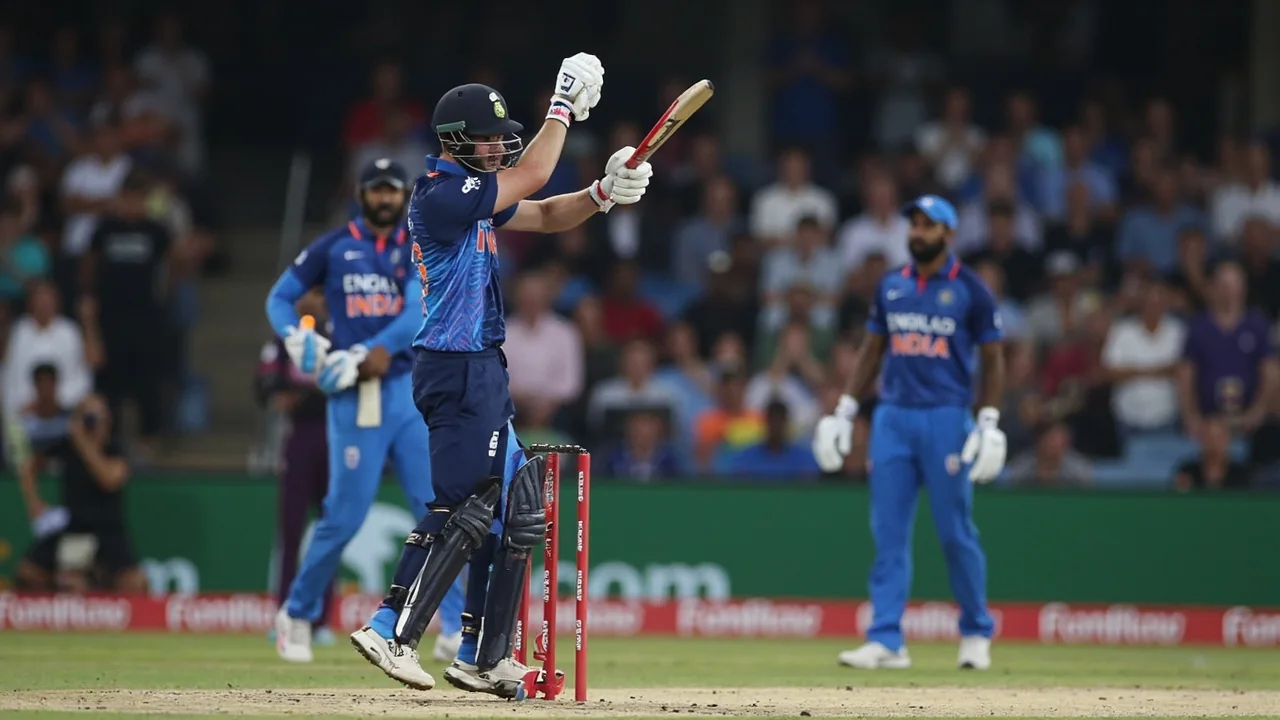
Tactical huddle, the moment the fielding plan is set
Captaincy calls for small contests and GPPs
The captaincy conversation on the night of 1 July 2026 ran along two tracks, and the contest size decided which one applied. For small contests, the model picks were the high-floor role anchors: an opener with a stable role and a high batting average, a bowling all-rounder whose overs were guaranteed regardless of the conditions, and a senior wicket-keeper-batter whose batting position was fixed in the top six. Phil Salt at the top of England's order was the named example, with the dossier's 1,717 T20 runs and the high average sitting comfortably above the kind of run-rate a small contest rewards.
For large-field GPPs, the captaincy read pointed the other way. Differential captains, in form, with a ceiling that the consensus was undervaluing, was the brief. On the India side, Abhishek Sharma was the named captaincy pick for GPPs: the 1,487 T20 runs and the 191 strike rate together describe a player who can produce the kind of innings that wins large-field contests. On the England side, the captaincy slot was contested between Brook himself, who carried the World Cup century form, and the differential of the lower-owned all-rounder, where the bid depended on how the contest framed ownership.
The pattern that holds across both contest sizes is the same: captaincy rewards a different kind of evidence at different contest sizes, and the same evidence can read as a safe pick and a long shot depending on what the field is doing. The dossier supplies the raw material; the contest structure picks which read of the raw material matters on the night.
What the verified record supports and what it does not
The BDCricTime preview carries a small but specific set of verifiable facts and a much larger set of editorial inferences around them. We treat the same boundary in this read. The verifiable record is: the 1 July 2026 date, the Riverside Ground venue, Brook's T20I numbers (1,296 runs, 30.85 average, 154.10 strike rate), the T20 World Cup century off 51 balls against Pakistan earlier in 2026, Arshdeep Singh's record of surpassing Chahal's 96 T20I wickets to become India's leading wicket-taker in the format, India's 7-3 win-loss record in their last ten T20Is against England, the first-innings average of 163.2 across the last five T20Is at the venue, the per-match first-innings scores of 188, 139, 176, 195 and 118, and the evening weather line (overcast, 14 to 16 degrees, 70% humidity, light SW breeze, 30% drizzle chance). The probable XIs for both sides are an editorial construction reported as probable, not as confirmed.
What the verified record does not carry is just as important. It does not carry the scorecard after the toss. It does not give a bowling order, a batting order, or a confirmed XI at the toss for either side. It does not carry the impact-player announcement. It does not quote any selector or franchise source. It does not record dew at the venue on the night, and it does not give ownership percentages, salary-cap prices or live contest data. Any captaincy read that rests on those inputs is reading past the source. Fantasy modelling built from this dossier should be a base case with a swap list, not a confident lock.
The retrospective lens matters here because the dossier was a preview, not a review. The thing that makes this read useful two and a half years on is the methodology it carries, not the call it made on the night. The pattern of reading venue spread before captaincy, of weighting the toss over recent form, and of separating the verified record from the inferred record is the part that survives.
Read next
Continue with the match-day reads
Two follow-ups that sit alongside this retrospective preview. The first is the methodology behind a powerplay pitch read; the second is the contest-by-contest captaincy framework.
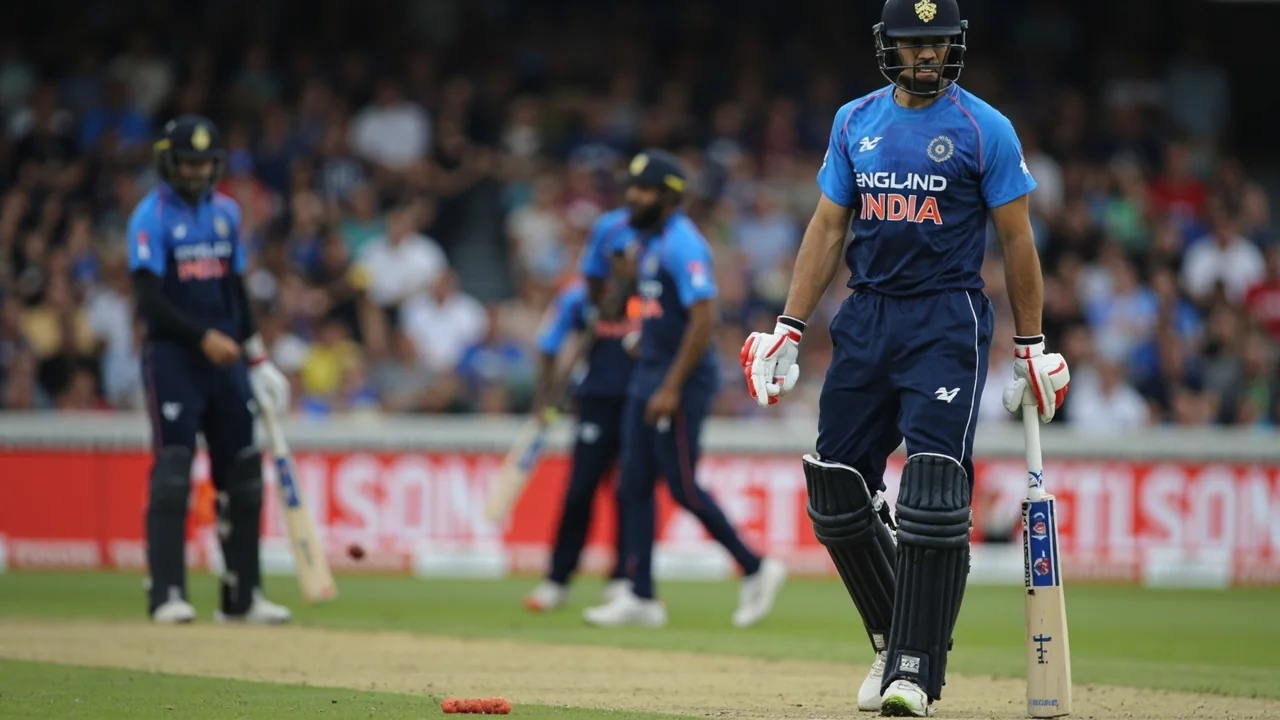
The Riverside Ground in Chester-le-Street, on Wednesday, 1 July 2026, as the opener of a five-match India tour of England.
What was Harry Brook's T20I form going into the match?
The BDCricTime preview recorded Brook with 1,296 T20I runs at an average of 30.85 and a strike rate of 154.10, including a T20 World Cup century off 51 balls against Pakistan earlier in 2026.
What was India's captaincy picture coming in?
Shreyas Iyer was leading a side coming off a 2-0 defeat to Ireland the previous week, the first consecutive defeat in India's recent T20I record.
Who was the new India T20I wicket-taking record holder?
Arshdeep Singh surpassed Yuzvendra Chahal's record of 96 T20I wickets during the Ireland series to become India's most successful bowler in the format, finishing the series with 131 T20 wickets in 86 matches at an economy of 8.5.
What was the first-innings average at Chester-le-Street?
163.2 runs across the last five T20Is at the venue, with per-match totals of 188, 139, 176, 195 and 118 in the order BDCricTime recorded them.
What was the weather expected to do?
The forecast called for overcast skies, 14 to 16 degrees Celsius, 70% humidity, a light south-westerly breeze, and a 30% chance of light drizzle during the evening match.
Who were the named captaincy picks for GPPs?
Abhishek Sharma on the India side (1,487 T20 runs at a strike rate of 191 across 48 matches) for differential captaincy in large-field GPPs. On the England side, Sam Curran (696 runs and 66 wickets across 75 T20 matches) was the named all-rounder, with Phil Salt (1,717 runs across 60 matches) the named top-order pick for small contests.
What did India's recent head-to-head record look like?
India had won seven of their last ten T20 matches against England, with England winning three.
Where can I read the next prediction on the desk?
The editor's running list of confirmed-XI previews and verified venue reads lives on the Predictions desk. Use the site navigation to open it directly.
Next step
Build the lineup with the verified record, then verify the operator
The methodology behind a preview like this survives any single match. Read the venue first, weight the toss, separate confirmed from probable, then verify the operator before you deposit. That order is the difference between a defensible lineup and a guessed one.
18+ only. Fantasy cricket involves financial risk. Play responsibly. Only participate where legal in your state.Safer-play resources · State eligibility
Ready when you are
Build the lineup that earns the captain slot
Start with the prediction desk and verify the scoring rules before you lock your entry. The verification walkthrough takes five minutes and protects you from phishing apps and unusual permissions.